Brief
The final assignment is an open brief. Take a series of 10 photographs of any subject exploring the theme ‘Photography is Simple’. Each photograph should be a unique view; in other words, it should contain some new information, rather than repeat the information of the previous image.
Assignment notes
In your assignment notes explore how you think you’ve answered the brief. This is a chance for a little philosophical reflection. EYV student Tor Burridge:
‘I have reconsidered my standpoint that fundamentally photography is simple. When I shoot for the pure enjoyment of it photography does indeed feel simple. But really it is the product of layers of knowledge
– on composition, on light, the technicalities of my camera. It is also inevitably influenced by the work of others, the subtle lessons that I have unknowingly committed to memory about angles and viewpoint. So taking into consideration the effects of context, the mindset of
the viewer and also the subtleties of what influences a photographer to make an image in a particular way, I think it can be concluded that photography is simple – until it isn’t.’
Make sure you word process and spellcheck your notes as QWE (the Quality of Written English) is an important part of the presentation. Include a ‘Harvard’ bibliography to reference your reading and research for this assignment. The quality of your references and how deeply you’ve responded to them is more important than the quantity.
Photography is simple?
Through this assignment and the previous, I have become aware that my camera is like an extension of me. The difference I think has been the time spent in manual mode, now that this mode has sunk in I can’t see me reverting to the professional modes which I have used extensively in the past. In this way, photography is ( or is becoming simple ). In this assignment, the shots themselves simply took, however, there were much consideration and visioneering on my part to decide on ‘what’ to shoot. That does not, however, mean the effort was difficult or complex. For me, a large part of the benefit I have gained from the EYV course has been building my pre-consideration muscle. I am certain I now take considerably fewer shots to get the shot I want and I am more certain in my mind’s eye on what I hope to capture and represent. Serendipity is always there but I am more assured and pre-conceived in my approach to assignment 5 than I could have hoped to be on assignment 1. In this way, again, photography can appear simple.
Photography, its a bit like golf, simple to understand and gain a rudimentary capability in, even every now and then hit a world-class shot. To master golf, that’s a whole different bag of spoons. Not one of the top players in the history of the game would lay claim to mastery.
Assignment
For this series, I have chosen the theme of Time. For me this theme is enormous, I could say ‘infinite potential for the expression’ perhaps. It is also a fascinating subject to consider. In this series of 10 photographs, I aim to represent or symbolise in some way, how we as humans attempt to understand this phenomenon and indeed how the phenomenon affects us. To meet the brief, I aim in each photograph to consider a different viewpoint around this theme and thereby hope to express different information.
Try to explain the meaning of now, it is almost impossible to fully capture in words what now really is and how we interact and are impacted by it. As soon as you have it it is gone, it becomes then and joins the every increasing pantheon of the past as what was the future flows straight through now before you can grasp it. How long does now last anyway? Scientists have made a stab at how long now is as perceived by humans, this is deeply connected to consciousness and perception which is itself deeply connected to light as the universe unfolds to us in space-time. These concepts are fascinating and mysterious and deeply philosophical. Like the 2 dimensional flatlanders with only the merest glimpse of a 3-dimensional universe we 3-dimensional beings have an inkling of the phenomenon of the passage of time but to truly grasp it in all its totality is a mystery we may take to the end of our ….. time.
Photography is a representation in 2 dimensions of a 3-dimensional world caught in a single point of ‘now’ in the 4th dimension. That makes it a challenge but there is no other medium which addresses this challenge and can hope to be more successful.
Within the series I have written a short explanation for each shot, I think it is necessary for understanding but that may show a weakness in the imagery (at least in my mind). I like each shot in its own right, some more than others, of course, are stronger and more resolved but each I think has individual merit as well as working together as a series.
There are two choices I made which apply to all photographs in this series which can be explained at the outset. Both relate to the mystery of time and a photographic language aimed at representing this mystery. As mentioned a core idea here is that we can only grasp an understanding of time fleetingly and fractionally, we can never really hold it all at the same ‘time’. For this reason, all shots are monochrome so missing the dimension of colour and all are shot with wide-open aperture leading to much of each images being out of focus. Together with all shots taken at 50mm, these choices work to bring consistency across the series which counters the different compositions and information required by the brief.
Influences
It is not right for me to discuss individual photographers who may have influenced this series. In truth, I think myriad photographers have had some degree of influence and triggered inspiration for me in approaching this assignment. It is not true to say anyone or two can be highlighted as inspirational to the assignment.
Most if not all the photographs in this series are to some degree symbolic in essence with the image containing, at least I intend, some other meaning alongside that extracted directly from the actual information presented. Symbolism then is a core theme of the assignment and in completing the assignment I have conducted some degree of research into symbolism in photography. How this series could be viewed or classified with respect to symbolism. From this research I find the concept of equivalence is pertinent, with two main protagonists; Alfred Stieglitz and Minor White.
Alfred Steiglitz (1864..1946) dedicated himself to promoting photography as fine art. In creating the Photo-Secession group and gallery ( name shortened to 291) Steiglitz helped promote many contemporary photographers who were interested in photography as an art form. “In fact, all the Photo-Secessionist photographers were committed in greater or lesser degrees to what was called the Pictorialist style, meaning they favoured traditional genre subjects that had been sanctified by generations of conventional painters and techniques that tended to hide the intrinsic factuality of photography behind a softening mist.” encyclopedia Britannica. [2019]
Steiglitz is known for bringing forth an understanding of equivalence in photography. “a photographic image intended as a visual metaphor for a state of being.” encyclopedia Britannica. [2019]. This is resonant to many shots in this assignment.
Minor White (1908 .. 1976) who alongside Ansel Adams and others created the influential magazine Aperture, took Steiglitz idea of equivalence and expanded to sequences of image series rather than single images. White worked with a series of photographs, concentrating on the sequence to bring forth with the viewer a gestalt which is not necessarily apparent or connected to the individual images. “In one instant the sequence snapped into focus: The rise and fall of sexual tension,” wrote John Pultz describing his reaction to the series of 13 images ‘Songs without words’.
This is close to the idea I had with the series of images I present for this sequence. Each image intends to be symbolic in some way or at least allegorical to some aspect of time. Additionally, the series (and sequence) itself is intended to create in the viewer a deeper understanding of time and the impact this has on ourselves. For me, this is a feeling of increasing confusion and discomfort, building in tension towards the final two images which are aimed at resolving in a final conquering of these negative issues. I accept that this may well be different for each viewer.
The series
Limited
Our understanding of time is crystal clear but limited, we can see very clearly something of this concept and what it means to us but in reality, much is a mystery to us, out of our cognitive grasp.

Cascade
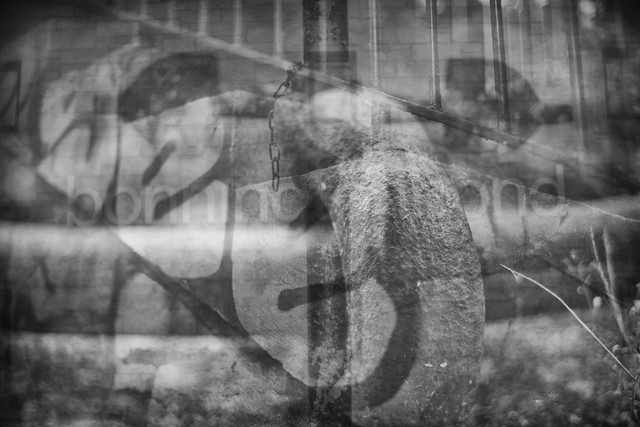
One explanation of the concept of time could be; that phenomenon which stops all the events in the universe happening together, that is, all the ‘nows’ existing in the same spacetime. Our conscious selves experience this possibly as a series of frames. If you watch a movie ( a pre-digital movie anyway ) it is presented to you at 30 frames per second and to us, it feels like a natural flow of time. This image aims to present the idea of all the ‘nows’ at the same time by colliding together just a few nows. I used photoshop & layers to create a multiple exposures of 4 images. The images were taken within a few minutes of each other on a walk through a local park.
Flow
Time flows as water does over a rock. The flow of time is perceived by us to be the most consistent and unerring of all phenomenon. Indeed like water flowing over rocks we expect to continue forever, unabated. We feel this but we feel it separately.

Arrow
A classic western view. For many of us, we think of time passing as an arrow, moving incessantly forward. The laws of thermodynamics and of increasing entropy dictate this to be true. The arrow shoots and we can have only ‘now’ in full focus, clear and detailed, it is immediately in the past though and the clarity begins to fade to memory. The future we head towards, we can visualise even control in some ways, but at some point, it too stretches and bends it’s way out of our knowledge beyond what we can know.

Circle
For all of history, time is perceived as circular and rhythmic; the daily cycle, lunar cycle, seasons and years, birth, death and rebirth. We are forever at some point in cyclic dances in time.

Connected
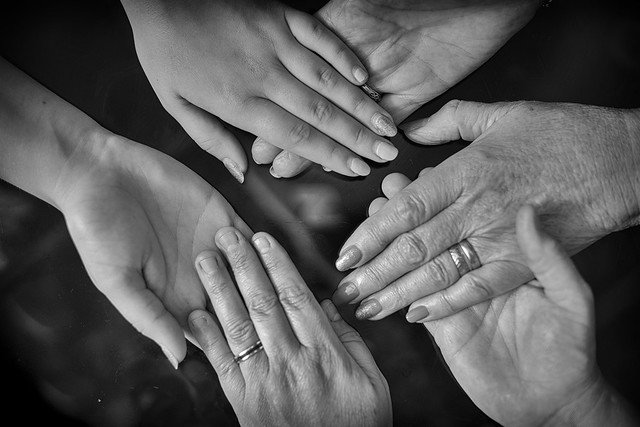
Through all time, every woman has an actual physical connection from their mother to every generation before that has gone before. The umbilical cord is that physical connection. A female child is physically connected to their mother, immediately after birth and before the cord is cut. In this way, every female child has a physical connection to every female ancestor going back to the first mammalian. The physical connection is only broken by the introduction of time. Symbolised here as a connection across 3 generations; My mother, my wife and my daughter.
Trap
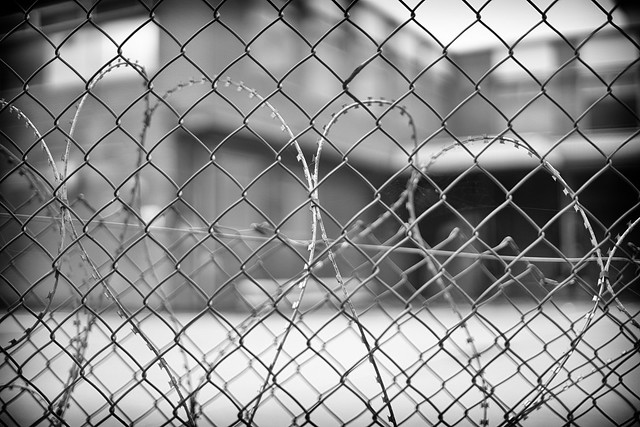
For many of us, for far too much of our time, we feel trapped in and by time. The banality of our 9 to 5 existence, trapped and waiting for our weekend. The desperation of the 7-year-old child trapped and just needs to be older to be 8. We are slaves in our time, trapped!
Loss
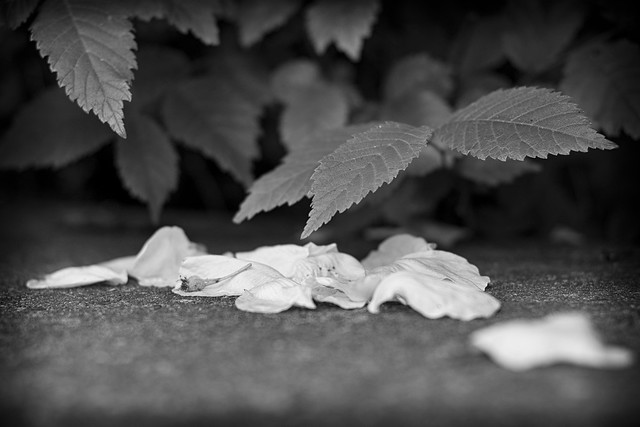
We know that with the passage of time, eventuality time will bring for to us loss. What was once strong and beautiful, in time fades and in the end is lost to us.
Remember
We defy time and loss by remembering those we have loved and can no longer have in our time. This is how we fight our battle against the tyranny of time and the loss it brings.
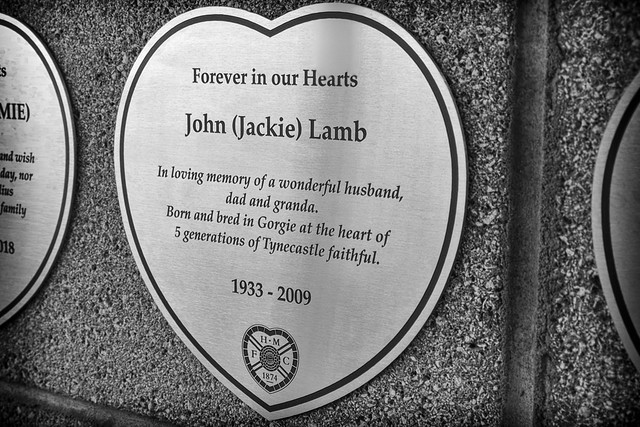
Moment
We truly win our battle with time when we transcend the tyranny when we step out of time and live only in the moment with those we love.
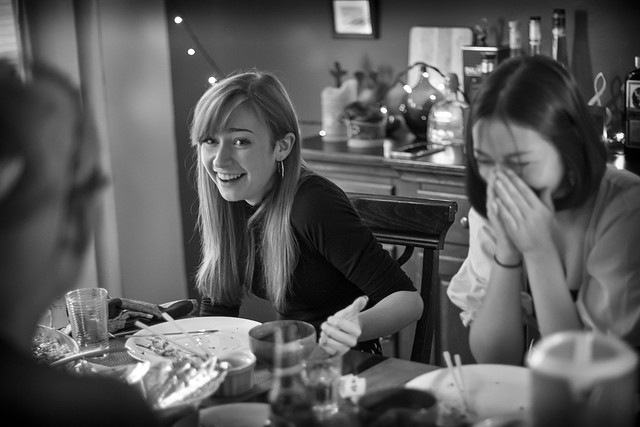
Reflection
Demonstration of technical and visual skills
Materials, techniques, observational skills, visual awareness, design and compositional skills.
I believe compositional skills are most evident in this series in particular on; Arrow, Cycle, and Loss. I hope I am correct in thinking technical skill is evident in the use of focus and depth of field.
Quality of outcome
Content, application of knowledge, presentation of work in a coherent manner, discernment, conceptualisation of thoughts, communication of ideas.
I believe my ideas are conceptualised and communicated well within this series through the use of symbolism and allegory. Although I have felt the need to explain each shot with a brief introduction.
Demonstration of creativity
Imagination, experimentation, invention.
Some experimentation and invention are evident in cascade. Imagination is evident in the use of symbolism and allegory on most shots
Context
Reflection, research, critical thinking.
I was interested to find that after I had constructed the series I should research symbolism in photography to accompany the assignment. Discovery of equivalence fits well with the series. This research was a reaction to the series rather than leading the series.
References
Pultz, John. “Equivalence, Symbolism, and Minor White’s Way into the Language of Photography.” Record of the Art Museum, Princeton University, vol. 39, no. 1/2, 1980, pp. 28–39. JSTOR, http://www.jstor.org/stable/3774627.
encyclopedia Britannica. 2019. Minor White AMERICAN PHOTOGRAPHER. [ONLINE] Available at: https://www.britannica.com/biography/Minor-White. [Accessed 11 August 2019].
encyclopedia Britannica. 2019. Minor White AMERICAN PHOTOGRAPHER. [ONLINE] Available at: https://www.britannica.com/biography/Minor-White. [Accessed 11 August 2019].


 DKL_OCA_ExpressingYourVision_LearningLog