Assignment 5: Photography is simple

Brief

The final assignment is an open brief. Take a series of 10 photographs of any subject exploring the theme ‘Photography is Simple’. Each photograph should be a unique view; in other words, it should contain some new information, rather than repeat the information of the previous image.

Assignment notes

In your assignment notes explore how you think you’ve answered the brief. This is a chance for a little philosophical reflection. EYV student Tor Burridge:

‘I have reconsidered my standpoint that fundamentally photography is simple. When I shoot for the pure enjoyment of it photography does indeed feel simple. But really it is the product of layers of knowledge
– on composition, on light, the technicalities of my camera. It is also inevitably influenced by the work of others, the subtle lessons that I have unknowingly committed to memory about angles and viewpoint. So taking into consideration the effects of context, the mindset of

the viewer and also the subtleties of what influences a photographer to make an image in a particular way, I think it can be concluded that photography is simple – until it isn’t.’

Make sure you word process and spellcheck your notes as QWE (the Quality of Written English) is an important part of the presentation. Include a ‘Harvard’ bibliography to reference your reading and research for this assignment. The quality of your references and how deeply you’ve responded to them is more important than the quantity.


Photography is simple?

Through this assignment and the previous, I have become aware that my camera is like an extension of me. The difference I think has been the time spent in manual mode, now that this mode has sunk in I can’t see me reverting to the professional modes which I have used extensively in the past. In this way, photography is ( or is becoming simple ). In this assignment, the shots themselves simply took, however, there were much consideration and visioneering on my part to decide on ‘what’ to shoot. That does not, however, mean the effort was difficult or complex. For me, a large part of the benefit I have gained from the EYV course has been building my pre-consideration muscle. I am certain I now take considerably fewer shots to get the shot I want and I am more certain in my mind’s eye on what I hope to capture and represent. Serendipity is always there but I am more assured and pre-conceived in my approach to assignment 5 than I could have hoped to be on assignment 1. In this way, again, photography can appear simple.

Photography, its a bit like golf, simple to understand and gain a rudimentary capability in, even every now and then hit a world-class shot. To master golf, that’s a whole different bag of spoons. Not one of the top players in the history of the game would lay claim to mastery.


Assignment

For this series, I have chosen the theme of Time. For me this theme is enormous, I could say ‘infinite potential for the expression’ perhaps. It is also a fascinating subject to consider. In this series of 10 photographs, I aim to represent or symbolise in some way, how we as humans attempt to understand this phenomenon and indeed how the phenomenon affects us. To meet the brief, I aim in each photograph to consider a different viewpoint around this theme and thereby hope to express different information.
Try to explain the meaning of now, it is almost impossible to fully capture in words what now really is and how we interact and are impacted by it. As soon as you have it it is gone, it becomes then and joins the every increasing pantheon of the past as what was the future flows straight through now before you can grasp it. How long does now last anyway? Scientists have made a stab at how long now is as perceived by humans, this is deeply connected to consciousness and perception which is itself deeply connected to light as the universe unfolds to us in space-time. These concepts are fascinating and mysterious and deeply philosophical. Like the 2 dimensional flatlanders with only the merest glimpse of a 3-dimensional universe we 3-dimensional beings have an inkling of the phenomenon of the passage of time but to truly grasp it in all its totality is a mystery we may take to the end of our ….. time.

Photography is a representation in 2 dimensions of a 3-dimensional world caught in a single point of ‘now’ in the 4th dimension. That makes it a challenge but there is no other medium which addresses this challenge and can hope to be more successful.

Within the series I have written a short explanation for each shot, I think it is necessary for understanding but that may show a weakness in the imagery (at least in my mind). I like each shot in its own right, some more than others, of course, are stronger and more resolved but each I think has individual merit as well as working together as a series.

There are two choices I made which apply to all photographs in this series which can be explained at the outset. Both relate to the mystery of time and a photographic language aimed at representing this mystery. As mentioned a core idea here is that we can only grasp an understanding of time fleetingly and fractionally, we can never really hold it all at the same ‘time’. For this reason, all shots are monochrome so missing the dimension of colour and all are shot with wide-open aperture leading to much of each images being out of focus. Together with all shots taken at 50mm, these choices work to bring consistency across the series which counters the different compositions and information required by the brief.


Influences

It is not right for me to discuss individual photographers who may have influenced this series. In truth, I think myriad photographers have had some degree of influence and triggered inspiration for me in approaching this assignment. It is not true to say anyone or two can be highlighted as inspirational to the assignment.

Most if not all the photographs in this series are to some degree symbolic in essence with the image containing, at least I intend, some other meaning alongside that extracted directly from the actual information presented. Symbolism then is a core theme of the assignment and in completing the assignment I have conducted some degree of research into symbolism in photography. How this series could be viewed or classified with respect to symbolism. From this research I find the concept of equivalence is pertinent, with two main protagonists; Alfred Stieglitz and Minor White.

Alfred Steiglitz (1864..1946) dedicated himself to promoting photography as fine art. In creating the Photo-Secession group and gallery ( name shortened to 291) Steiglitz helped promote many contemporary photographers who were interested in photography as an art form. “In fact, all the Photo-Secessionist photographers were committed in greater or lesser degrees to what was called the Pictorialist style, meaning they favoured traditional genre subjects that had been sanctified by generations of conventional painters and techniques that tended to hide the intrinsic factuality of photography behind a softening mist.” encyclopedia Britannica. [2019]

Steiglitz is known for bringing forth an understanding of equivalence in photography. “a photographic image intended as a visual metaphor for a state of being.” encyclopedia Britannica. [2019]. This is resonant to many shots in this assignment.

Minor White (1908 .. 1976) who alongside Ansel Adams and others created the influential magazine Aperture, took Steiglitz idea of equivalence and expanded to sequences of image series rather than single images. White worked with a series of photographs, concentrating on the sequence to bring forth with the viewer a gestalt which is not necessarily apparent or connected to the individual images. “In one instant the sequence snapped into focus: The rise and fall of sexual tension,” wrote John Pultz describing his reaction to the series of 13 images ‘Songs without words’.

This is close to the idea I had with the series of images I present for this sequence. Each image intends to be symbolic in some way or at least allegorical to some aspect of time. Additionally, the series (and sequence) itself is intended to create in the viewer a deeper understanding of time and the impact this has on ourselves. For me, this is a feeling of increasing confusion and discomfort, building in tension towards the final two images which are aimed at resolving in a final conquering of these negative issues. I accept that this may well be different for each viewer.


The series

Limited

Our understanding of time is crystal clear but limited, we can see very clearly something of this concept and what it means to us but in reality, much is a mystery to us, out of our cognitive grasp.

Untitled


Cascade

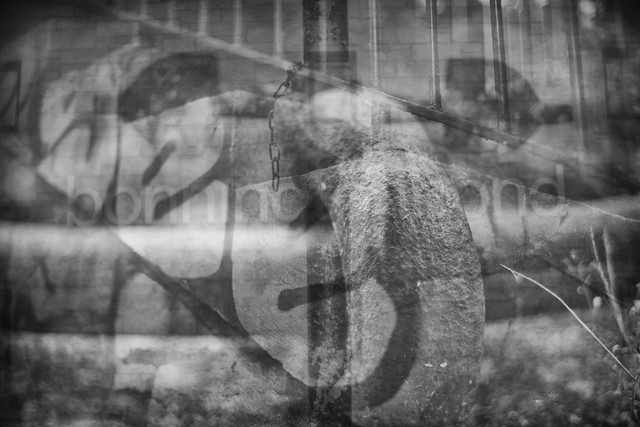
One explanation of the concept of time could be; that phenomenon which stops all the events in the universe happening together, that is, all the ‘nows’ existing in the same spacetime. Our conscious selves experience this possibly as a series of frames. If you watch a movie ( a pre-digital movie anyway ) it is presented to you at 30 frames per second and to us, it feels like a natural flow of time. This image aims to present the idea of all the ‘nows’ at the same time by colliding together just a few nows. I used photoshop & layers to create a multiple exposures of 4 images. The images were taken within a few minutes of each other on a walk through a local park.
Untitled


Flow

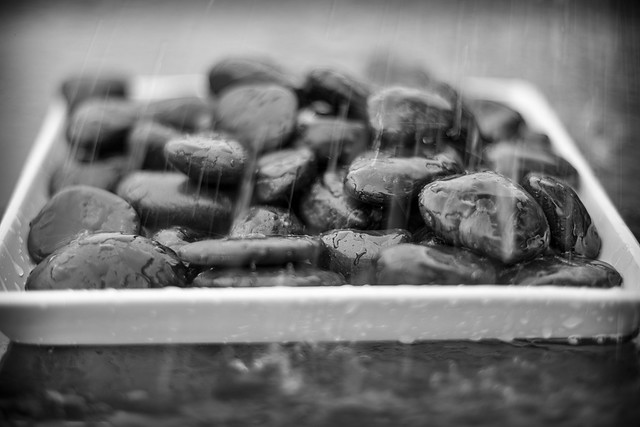
Time flows as water does over a rock. The flow of time is perceived by us to be the most consistent and unerring of all phenomenon. Indeed like water flowing over rocks we expect to continue forever, unabated. We feel this but we feel it separately.
Untitled


Arrow

A classic western view. For many of us, we think of time passing as an arrow, moving incessantly forward. The laws of thermodynamics and of increasing entropy dictate this to be true. The arrow shoots and we can have only ‘now’ in full focus, clear and detailed, it is immediately in the past though and the clarity begins to fade to memory. The future we head towards, we can visualise even control in some ways, but at some point, it too stretches and bends it’s way out of our knowledge beyond what we can know.

Untitled


Circle

For all of history, time is perceived as circular and rhythmic; the daily cycle, lunar cycle, seasons and years, birth, death and rebirth. We are forever at some point in cyclic dances in time.

Untitled


Connected

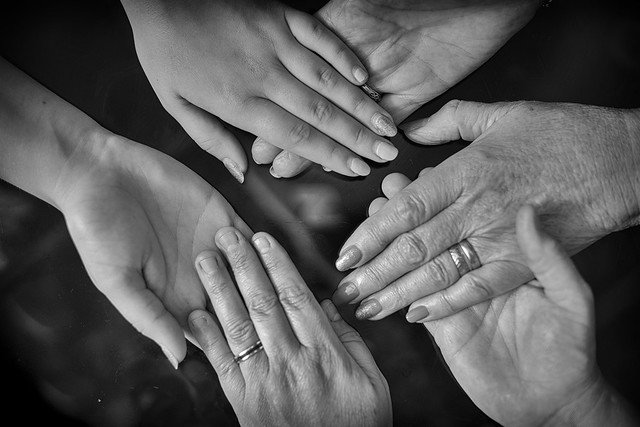
Through all time, every woman has an actual physical connection from their mother to every generation before that has gone before. The umbilical cord is that physical connection. A female child is physically connected to their mother, immediately after birth and before the cord is cut. In this way, every female child has a physical connection to every female ancestor going back to the first mammalian. The physical connection is only broken by the introduction of time. Symbolised here as a connection across 3 generations; My mother, my wife and my daughter.
Untitled


Trap

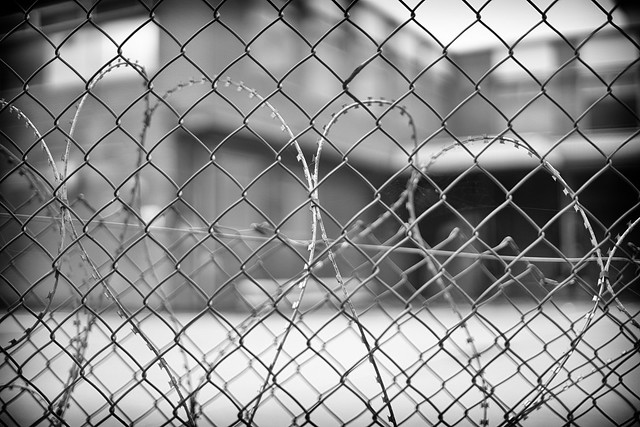
For many of us, for far too much of our time, we feel trapped in and by time. The banality of our 9 to 5 existence, trapped and waiting for our weekend. The desperation of the 7-year-old child trapped and just needs to be older to be 8. We are slaves in our time, trapped!
Untitled


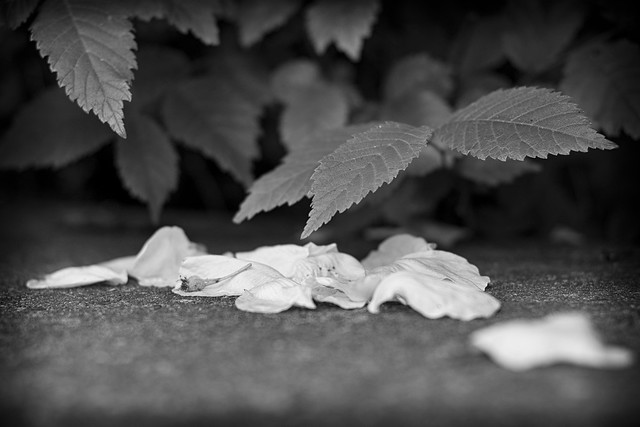
Loss

We know that with the passage of time, eventuality time will bring for to us loss. What was once strong and beautiful, in time fades and in the end is lost to us.
Untitled


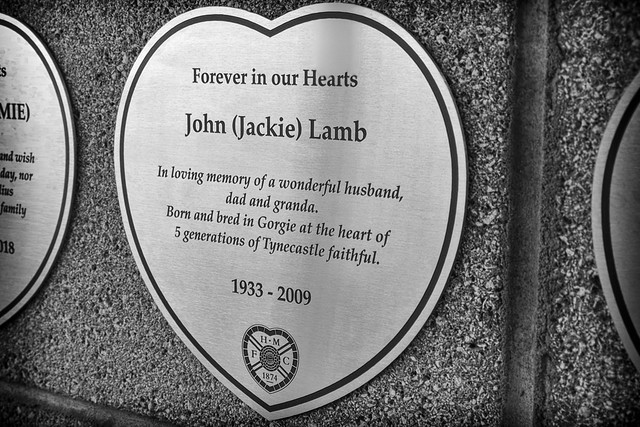
Remember

We defy time and loss by remembering those we have loved and can no longer have in our time. This is how we fight our battle against the tyranny of time and the loss it brings.
Untitled


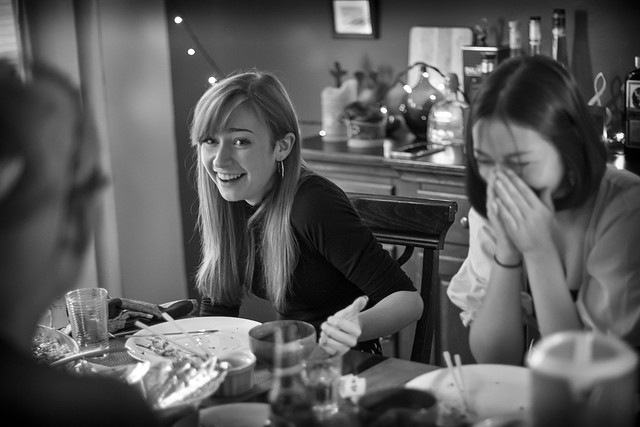
Moment

We truly win our battle with time when we transcend the tyranny when we step out of time and live only in the moment with those we love.
Untitled


Reflection

Demonstration of technical and visual skills

Materials, techniques, observational skills, visual awareness, design and compositional skills.

I believe compositional skills are most evident in this series in particular on; Arrow, Cycle, and Loss. I hope I am correct in thinking technical skill is evident in the use of focus and depth of field.

Quality of outcome

Content, application of knowledge, presentation of work in a coherent manner, discernment, conceptualisation of thoughts, communication of ideas.

I believe my ideas are conceptualised and communicated well within this series through the use of symbolism and allegory. Although I have felt the need to explain each shot with a brief introduction.

Demonstration of creativity

Imagination, experimentation, invention.

Some experimentation and invention are evident in cascade. Imagination is evident in the use of symbolism and allegory on most shots

Context

Reflection, research, critical thinking.

I was interested to find that after I had constructed the series I should research symbolism in photography to accompany the assignment. Discovery of equivalence fits well with the series. This research was a reaction to the series rather than leading the series.


References

Pultz, John. “Equivalence, Symbolism, and Minor White’s Way into the Language of Photography.” Record of the Art Museum, Princeton University, vol. 39, no. 1/2, 1980, pp. 28–39. JSTOR, http://www.jstor.org/stable/3774627.

encyclopedia Britannica. 2019. Minor White AMERICAN PHOTOGRAPHER. [ONLINE] Available at: https://www.britannica.com/biography/Minor-White. [Accessed 11 August 2019].

encyclopedia Britannica. 2019. Minor White AMERICAN PHOTOGRAPHER. [ONLINE] Available at: https://www.britannica.com/biography/Minor-White. [Accessed 11 August 2019].

Assignment 4 : Languages of light – reworked

The Brief

Revisit one of the exercises on daylight, artificial light or controlled light from Part Four (Ex 4.1, Ex 4.2 or Ex 4.3) and develop it into a formal assignment submission. The submission requirement for this assignment is a set of between six and ten high-quality photographic prints.There are many ways to edit and the most valuable one is probably to show your work to friends, family and your OCA peers for feedback – you are guaranteed to discover something new in your work. Another tip is to pin the work up on the wall and live with a for a few days. ‘A Quick Guide to Editing Your Photo Series using Stickies’ on the IPO (Invisible Photographer Asia) website, but bear in mind that this is not a narrative assignment – you’re not required to produce a story.
EDITING 101 – A Quick Guide to Editing Your Photo Series using Stickies

Assessment of photography in any context is an assessment of images and accompanying words so please Include a written analysis of your work outlining:

how you have developed the assignment from the original exercise in Part 4
which practitioners you’ve looked at for inspiration and how their work has influenced you
your technical approach and any particular techniques you incorporated
the strengths and weaknesses of particular photographs and your project as a whole (self-
assessment)

Conclude your notes with a personal reflection on how you’ve developed the exercise in order to meet the descriptors of the Creativity criteria. Write 500–1,000 words.


Background

Layered, complex and mysterious…

This is a reworking of assignment 4 after feedback from my tutor confirmed a suspected problem I had with the original submission and how it addressed the brief. In short the original submission was orthogonal to the brief at best. Shame, I really enjoyed creating the series, but in truth I was quite aware of the issue from the outset. Rather than identify a single element of light to concentrate on I attempted to investigate further on a wide spectrum of the complexity of light. In this reworking I focus in on artificial light and how this can be used to create atmospheric photographs.

Whilst going through the assignments and exercises in EYV I am learning many things about photography of course but also many things about myself. For instance I am finding out about my approach to the assignments; the inspirations and ideas for my assignments tend to come in an iterative and chaotic process of, part considered thought and part emergent ideas from the photographs I am taking. Considering my work during write up then is in part stratification and clarification of this cyclic process. There are in truth many thoughts and ideas I have during this process, some of which survive and galvanise into the rationale for the assignments, some die early and others linger in the background supporting the assignments but never having the strength to be promoted to inclusion in my write ups. For this re-work I have not taken any new shots. I have revisited the contact sheet and more importantly reconsidered the process I went through, the inspiration I used and the ideas i had along the way. Searching through this I could have chosen any of the aspects investigated in part 4 since all were fascinating to me ( hence my desire to stay broad and cover all aspects ) I have though chosen to concentrate on artificial light and how this can bring interest, drama and ambiguity to an image.

Four influences were strongest here –

Although not apparent in many of the photographs in this submission, the work of Brassai and his shots of Paris had a big influence throughout. In particular I picked up on Brassai’s use of light to help bring forth a narrative – see entry Brassai’s use of light to strengthen composition  from my learning log

Sato Shintaro work in neon street scenes in the blue hour I found very busy and exciting much like the city he photographs. I have been lucky enough to visit Tokyo and feel the energy from these images. This is in no small way powered by the copious neon light. This series has some similarities in that many of the shots are street scenes illuminated by artificial light, Helsinki however is much more relaxed and laid back than Tokyo and I hope this comes across in the series.
The work of Rut Blees’ night time images of London producing an ethereal gold wash across the city streets. The title of my series is Helsinki Gold but it was not the gold I took as inspiration it was the idea that a single colour can be pre-eminent. This was interesting to me during this series, that the colour happens to be gold was an emergent property of my investigations however.
Finally, inspiration from Lisa Barnard, The Canary and the hammer (Stein, 2019). This helped support the idea that a set of apparently disconnected images can come together successfully under a clear rationale.


Rationale

The series is a journey through the streets of Helsinki on a near midsummer midweek evening. It had actually been Finland day the day before which may explain to some extent the relative quiet of the scenes here as everyone was recovering from the previous days festivities but in truth the impression I got from the city was one of relaxation and simplicity – Helsinki is comfortable in it’s own skin. The journey begins just as the city is entering it’s blue hour and ends in darkness ( not so dark this far north in the middle of June ). As The light of the day recedes the influence of the street lights take on an ever increasing impact on the images created and the series at it’s heart aims to reflect this simple suggestion. I often feel there is an ambiguity in streets under artificial light. Everything seems more close more here and right now but at the same time there is an undercurrent of the world being not quite what it seems, ambiguous. Sometimes exciting and sometimes even dangerous but always more interesting. The impression of the shopfront (4) and the club window (7) during day time are tame and bland compared to these same scenes under dark and bathed in artificial illumination. The images of light on the street (1) and reflected lights on the building opposite (2) again suggest a world enhanced and more complex which is not apparent during the reality of daylight. Spaces (3) and faces (5) are also rendered with more intrigue and drama than their straightforward daylight equivalents. In the rooms of our evenings, light adds atmosphere and a touch of other world to our environments (6)

Technical

The series was shot entirely in manual mode which I am finding much more satisfying than my default which is to shoot in Aperture priority. I typically use histogram to select the correct exposure and find that this methods frees me up to select the correct exposure for the subject with ease.

As the light was fading and exposure time was increasing I increased ISO but only a little, i used a small tripod where necessary but a few shots of around 1/6s were taken handheld leaning against a post to aid stability.

Strengths and weaknesses

I think the series as a whole works as a response to the brief with focus on artificial light and and also as a representation of the ideas I had in mind whilst creating it. However none of the images I think are particularly strong or stand up particularly well on their own.

The strongest individual image in my view is (1) lights on street, strong lines and composition and a clear introduction to the series.

Image (3) Stockman is the image I would like to have been better than it turned out, focus is a bit soft ( handheld ), I don’t think this detracts from the image per-se but it is not what I intended for this. I also think it works better in a low contrast monochrome but that of course would not fit with the series. I did consider the series in monochrome, this can be seen in the sequencing shot, rejected as the clarity of single colour is lost.

Given time I would progress the series across all composition types in the series; street, shop/club fronts, people, reflected light, lights themselves. As the series expands across all elements the central theme of Helsinki in Gold would be strengthened. This could also be taken out of Helsinki, Edinburgh for me feels more silver than gold which is a project worth pursuing as a counterpoint to Helsinki Gold.

Creativity

I believe there is evidence of invention and creativity to bring together a coherent series of images under a single clear rationale (gold), from an apparently disconnected set. Imagination & invention also in some of the images, notably the lights super-imposed on reflection of building (2) and the slightly abstract lights on wall (6)


Presentation

Considering sequence and presentation for the series. This series would be best presented as a sequence of  individual framed images in perhaps a gallery setting. The sequence is chosen as a progression in throught the evening as the artificial light becomes more pronounced and gold becomes increasingly the subject of the the images.

For the process of sequencing I printed all shortlisted images and used a wall board to position the images until I had settled on my favoured sequence.

Untitled


Photoshop was used to create a vision of the art gallery setting with each image framed and hung in the intended sequence.

Untitled

Untitled


The series

Helsinki Gold

1

ƒ/5.0 47.0 mm SS1/20 ISO200

Untitled


2

ƒ/4.5 49.0 mm SS1/60 ISO200

Untitled


3

ƒ/9.0 70.0 mm SS1/6 ISO200

Untitled


4

ƒ/4.5 50.0 mm SS1/40 ISO400

Untitled


5

ƒ/5.6 70.0 mm SS1/10 ISO400

Untitled


6

ƒ/3.5 31.0 mm SS1/10 ISO400

Untitled


7

ƒ/4.5 50.0 mm SS1/5 ISO400

Untitled


Assignment 4: Languages of light


The Brief

Revisit one of the exercises on daylight, artificial light or controlled light from Part Four (Ex 4.1, Ex 4.2 or Ex 4.3) and develop it into a formal assignment submission. The submission requirement for this assignment is a set of between six and ten high-quality photographic prints.There are many ways to edit and the most valuable one is probably to show your work to friends, family and your OCA peers for feedback – you are guaranteed to discover something new in your work. Another tip is to pin the work up on the wall and live with a for a few days. ‘A Quick Guide to Editing Your Photo Series using Stickies’ on the IPO (Invisible Photographer Asia) website, but bear in mind that this is not a narrative assignment – you’re not required to produce a story.

EDITING 101 – A Quick Guide to Editing Your Photo Series using Stickies

Assessment of photography in any context is an assessment of images and accompanying words so please Include a written analysis of your work outlining:

  • how you have developed the assignment from the original exercise in Part 4
  • which practitioners you’ve looked at for inspiration and how their work has influenced you
  • your technical approach and any particular techniques you incorporated
  • the strengths and weaknesses of particular photographs and your project as a whole (self-

    assessment)

    Conclude your notes with a personal reflection on how you’ve developed the exercise in order to meet the descriptors of the Creativity criteria. Write 500–1,000 words.


Background

Layered, complex and mysterious…

From the opening statement in the first project in part 4, the seed of inspiration for my submission germinated. I wanted to address and investigate the complexity and mystery  in light and the myriad ways it can influence photography. The different levels and dimensions of impact are what I hope to express in some small way in the photographs I submit here for assignment 4.

To achieve this I have not concentrated on any particular aspect of light as was progressed through the projects and exercises in part 4 but instead have attempted to investigate a number of aspects in a sort of journey through the dimensions and levels of influence and impact. This journey progresses through ;

  • Light with incidental or subliminal influence on an image
  • Light brings forth and aids a narrative
  • Light as a means to express a mood or feeling
  • Light bringing strength and depth to the subject
  • Light taking centre stage as colour and form in abstract images
  • Light dominates as colour

The journey is an arc taking the viewer from light having minimal impact to light being all powerful, with a variety of aspects along the way as the images first building in subjectivity and then move progressively towards abstract as the use of light attains more power and influence on the images

Although not apparent in many of the photographs in this submission, the work of Brassai and his shots of Paris had a big influence throughout. In particular I picked up on Brassai’s use of light to help bring forth a narrative – see entry Brassai’s use of light to strengthen composition  from my learning log

I took inspiration from a visit to Helsinki art gallery and the work of Lars Gunner Lordstrom & Yves Klein, their use of bold colours and strong lines in their abstract images. This can be seen in the transition to the more abstract images in the later photographs in this series. Finally, inspiration from Lisa Barnard, The Canary and the hammer (Stein, 2019). This helped support the idea that a set of apparently disconnected images can come together successfully under a clear rationale.

Submission

I submit 9 photographs for this assignment covering what I see as an infinitesimally thin and broken slice through the huge multi-faceted spectrum of light and it’s relationship to photography. I found this part of EYV and this assignment in particular fascinating and found myself looking at the world and my work in many different ways as I searched for and discovered new ways to view light and how this affects my vision and the photographs I take.

Light with incidental or subliminal influence on an image

The journey begins with how light can be almost incidental or subliminal in its effect on a photograph. Of course this can’t be true as without light we have no photograph at all, but, other than to bring the picture into being light can have a minimal impact on the image produced. This I see in shot 1 – Incidental Nudity. In this shot I did actually use a small flash which has helped to produce the minimal shadow that is apparent, otherwise the room is lit with natural light.

Light brings forth and aids a narrative

Through the use of light to help suggest or add strength to a narrative. Shot 2 – Time to play & shot 3 – Speed of the light of loneliness. In both cases natural daylight and shadow are used to aid the narrative in each photograph. Inspiration here comes from Brassai and his shots of Paris in the 1930s, although Brassai typically took shots under artificial light, what I took as inspiration is his ability to very subtly use light to bring his stories to life, highlighting what is important to the narrative.

Light as a means to express a mood or feeling

The journey continues with the use of light to visualise a mood or feeling as this overtakes any narrative at play. Shot 4 – Let us play together & shot 5 Let there be death and roses. In these images I switch to night shots and artificial light. The streets in a city at night are a mood of expectation and anticipation,  of some excitement, danger perhaps. Even the daytime norm under darkness becomes intriguing.  In this case the city is Helsinki on a midsummer night.

Light bringing strength and depth to the subject

From here my journey through light, removes all notion of narrative and attempts to see how light can be used on still life to bring depth and strength to the image. Shot 6 And the roses are strong. Artificial light from a hand held flash is placed directly in front in an otherwise completely dark environment. This produces a clarity and strength for the image.

Light taking centre stage as colour and form in abstract images

Continuing the journey, the use of light becomes ever stronger, taking more and more a dominant position in the photographs. The shots start to become abstract as light and colour in their own right take centre stage. Shot 7 – Wall Lights & shot 8 – False dawn. Both shots taken in natural daylight.

Light dominates as colour

The journey ends with light ( colour ) being completely dominant and the one and only subject of the final photograph.  Shot 9 – All about the light.

Technical

All shots were taken in manual mode. I am finding this much more intuitive and satisfying that aperture priority which is my normal mode of choice or shutter priority which i used extensively in part 3 of EYV. I typically use the histogram along with electronic viewfinder in the camera ( Sony a7 II ) to decide on the correct exposure. Given the nature of photographs in this series, many of the shots have an unbalanced histogram.

Two of the abstract shots benefitted from a manipulation of S-Curve in post processing, other than that and some cropping all photographs are unchanged from the RAW image captured by the camera.

I used an off camera hand held flash for two of the shots where artificial light was required to enhance the image. The night shots were taken with slow shutter speed so a small tripod was used to ensure a sharp image.

For shot 6 the vase of roses were placed in a totally dark room with the only light from the off camera flash. I set focus using auto-focus with lights on and then moved to manual focus to retain this setting and experimented on exposure with the lights off until i achieved the image here.

All other settings were selected individually appropriate for each shot, therefore there is no consistency in aperture or focal length.

Strengths and weaknesses

1 strength – good use of depth of field and colour palette

1 weakness – composition, I would be happier if the top of the pile of books was in the frame

2 strength – good composition and exposure

2 weakness – not convinced the point of this shot would be clear without the write up

3 strength – strong narrative content

3 weakness – I would have preferred a tighter frame to the subject

4 strength – good composition and exposure, interesting

4 weakness – as with 2, not convinced the point of this shot would be clear without the write up

5 strength – interesting and engaging image

5 weakness – composition is a little flat and square

6 strength – strong image with lovely colours, exactly what i wanted to get

7 strength – clear and strong abstract image

8 strength – creative light flare, good resolution so would work well as a large image

8 weakness – as with 2, not convinced the point of this shot would be clear without the write up

9 strength – strong abstract image

9 weakness – I would have preferred a wider frame so more pattern could be included. This was not possible. That said I could create the effect I wanted in photoshop.


Creativity

Creativity was not foremost in my mind whilst creating this assignment, that said I think the abstract images created from everyday scenes shows a reasonable level of creativity. And the roses are strong is technically creative I think and successful in my opinion. The other shots I think are more serendipity and opportunism that creative. Overall I think the series and it’s narrative arc through aspects of light is itself creative.


The Sequence

The sequence of photographs is presented in photo-book format :-

Ass4_Photobook movie


1 – Incidental Nudity

ƒ/4.0 33.0 mm SS 1/15 ISO200
Off camera flash

Untitled


2 – Time to play

ƒƒ/7.1 46.0 mm SS 1/200 ISO 100

Untitled


3 – Speed of the light of loneliness

ƒ/5.6 70.0 mm SS 1/500 ISO 100

Untitled


4 – Let us play together

ƒ/4.5 50.0 mm SS 1/40 ISO 400

Tripod

Untitled


5 – Let there be death and roses

ƒ/4.5 50.0 mm SS 1/5 ISO 400

Tripod

Untitled


6 – And the roses are strong

ƒ/16.0 45.0 mm SS 1.6 ISO 50
Off camera flash, tripod

Untitled


7 – Wall lights

ƒ/7.1 70.0 mm SS 1/250 ISO 200

Helsinki hotel


8 – False dawn


ƒ/16.0 70.0 mm SS 1/6400 ISO 100

Untitled


9 – All about the light

ƒ/5.6 70.0 mm SS 1/8 ISO 100

Tripod

Untitled


Bibliography

1000 words. 2019. Lisa Barnard The Canary & The Hammer Essay by Lisa Stein. [ONLINE] Available at: http://www.1000wordsmag.com/lisa-barnard/. [Accessed 17 June 2019].

Assignment 3: The (in)decisive moment

Brief

Create a set of between six and ten finished images on the theme of the decisive moment. You may choose to create imagery that supports the tradition of the ‘decisive moment’ or you may choose to question or invert the concept by presenting a series of ‘indecisive’ moments. Your aim isn’t to tell a story, but in order to work naturally as a series there should be a linking theme, whether it’s a location, event or particular period of time.

Include a written introduction to your work of between 500 and 1000 words outlining your initial ideas and subsequent development. You’ll need to contextualise your response with photographers that you’ve looked at, and don’t forget to reference the reading that you’ve done.

Introduction

During this assignment I had two themes which I worked with in parallel only deciding very late which I wanted to go forward with and present here.

The theme which I have not brought forward asks the question, what would the decisive moment be if those moments are 1/2s long? This theme is connected to a deep interest I have in physics and the concept of time and now. How this time is connected with matter and energy revealing reality to us at the speed of light. All visual arts and especially photography has these concepts as bedrock. I was very lucky to come across a phenomenon when shooting seagulls at 400ms, these cease to look like seagull’s or even material and start to resemble energy waves. I created a number of abstract images which appear on the contact sheet for the assignment. I investigated Wolgang Tillman’s abstract work and found some similarities and inspiration. Ultimately I could not find a strong enough link to the brief for this assignment. I may however bring this idea back later in Expressing Your Vision as I find the concept and output fascinating.

Inspiration for the theme of this series comes directly from The Present, the photobook by Paul Graham and from the review of this work by Colin Pantall. The images I created are both a challenge to and in some ways an endorsement of what I think about The Present. For technique and understanding of street photography and not being particularly experienced in this area I read – Larry Fink On composition and improvisation and used this for much of the technical decisions I made.

Pantall writes about The Present “It looks pretty much like any other run down place. The people are the same. They’re not glamorous or striking or eccentric, but rather they’re harried, harassed and distant;” The work contains a series of photographs of Manhattan and the people who inhabit that area of New York. For most of us we do not think of Manhattan as ‘like any other run down place’ we think of Manhattan as spectacular and exciting, evoking images of; the Empire State building, central park, the Brooklyn bridge etc Perhaps you need to look up most of the time to see Manhattan’s splendour.

The series I present here offers a point of view and comment on the effect our surroundings and environment have on us and how this can be related to the decisive moment; ‘The people are the same. They’re not glamorous or striking or eccentric, but rather they’re harried, harassed and distant’.

I read from this that Pantall means, the run down nature of the place in some way causes the people therein to be harried and harassed. I found this an interesting viewpoint and not one I fully agree with. I found this worthy of exploration for this assignment and how I could use my environment to explain why I disagree at least in part.

I live in the city of Edinburgh, Scotland which offers a very different experience and environment from Manhattan and I argue is in it’s own way compelling and interesting as well as spectacular and exciting. Looking up whilst traversing the streets of Edinburgh certainly provides for some fantastic sights as does looking up in Manhattan. Edinburgh differs though in that the wonderful architecture, statues, gardens etc are perhaps more accessible, closer and more connected with us. When walking around in the centre of Edinburgh it is actually quite impossible to avoid being surrounded by all of this splendour, it is there on every turn and in every street. I wonder also if the age of city adds something to the connection we have, which is not there in Graham’s Manhattan of 2012.

This leads me to consider that the message Paul Graham gives us in The Present, could not be shot in the centre of Edinburgh or at least would need to be drastically different in style and composition. In this series I investigate this idea. I do approached this with a preconceived viewpoint however, which is a challenge to The Present. Our environment, no matter how interesting compelling and engaging will fade from our consciousness after even a small amount of time. In this way the environment becomes meaningless to the message, The Present does not need a ‘run down place’ to support the message.

In conclusion; We are left with ‘They’re not glamorous or striking or eccentric, but rather they’re harried, harassed and distant’ and the moments are invariably indecisive, regardless of surroundings.

In the series, all shots have something of interest which could pull on the attention of the subjects the people in the photographs however they fail to grab that attention. The subjects are oblivious, they do not see what is right there and are left introverted and conscious only of themselves. Sometimes harried or harassed, possibly just relaxed but always distant and focussed inward. To express this idea I sometimes crop or set out of focus the thing of interest other times this is not necessary and the interest is right there yet still ignored. Around the subjects are buildings, statues, street performers and the castle itself.

With a mind to the photographic style of The Present;

  • I have used a preset in Lightroom to evoke a rich analog film feel similar to the feel found in The Present.
  • Some, although not all images are shot with subjects in middle distance.
  • A number of the images are pairs where there is little difference between one shot and another.

Presentation

Following the central inspiration for the series I considered presenting in photobook form. After some experimentation using print outs to find the best layout and sequence I created a ‘psuedo photobook’ using adobe photoshop and lightroom shown in this short video clip.
Ass 3 Slideshow


Out of the present


We walk with yesteryear Hero in our midst, this time is yet still My Time,

The Fog can oft’ descend hiding the mighty one, and too soon My time is short,

So much in My life, is only Almost seen.

We are Collectively clipped right here,

whilst Contact comes from outside, bypasses and in,

Still the stress and wail, can’t burrow through my Fascination.


The Series


Hero in our midst

ƒ/5.0 30.0 mm 1/320s ISO200

Untitled


My time

ƒ/5.0 27.0 mm 1/400s ISO200

Untitled


Fog

ƒ/5.6 140.0 mm 1/200s ISO400

Untitled


My time is short

ƒ/5.6 140.0 mm 1/200s ISO400

Untitled


My life

ƒ/5.6 70.0 mm 1/2000s ISO320

Untitled


Almost seen

ƒ/5.6 70.0 mm 1/1600s ISO320

Untitled


Collectively clipped

ƒ/5.6 70.0 mm 1/320s ISO100

Untitled


Contact

ƒ/5.6 70.0 mm 1/640s ISO100

Untitled


Stress and wail

ƒ/5.6 70.0 mm 1/500s ISO100

Untitled


Fascination

ƒ/5.6 70.0 mm 1/500s ISO100

Untitled


Bibliography

Pantall, Colin (2012) The Present. At: http://www.photoeye.com/magazine/reviews/2012/05_17_The_Present.cfm (accessed 28.03.2019)

Assignment 2: Collecting

The brief

‘Fragments of a vessel which are to be glued together must match one another in the smallest details although they need not be like one another.’

(Walter Benjamin, [1936] 1999, p.79)

The Walter Benjamin quote above expresses the idea that a collection should reflect a single coherent idea, but you’ll also need technical rigour to match the photographs to each other ‘in the smallest details’. Start by choosing your focal length, aperture and viewpoint combination in advance.

Visually, similarities correspond so they’re easy to look at, but be careful of duplicates because repetition is boring. Differences are interesting because they contrast, but randomly changing your framing or allowing a confusion of detail into your backgrounds will distract from the viewing.

Brief

Create a series of between six and ten photographs on one of the following subjects:

  • Things
  • Views
  • Heads

Vision:

After some thought, experimentation false starts and trials, I settled on collecting things, the thing being – lighthouses.

As well as a clear aesthetic value, for me lighthouses have a raw utility and in that a beauty which I hope to capture in this series. Every lighthouse is different, even within the locality of a few hours drive from Edinburgh there is a plethora of examples and I again hope to present something of the myriad styles and purposes within the series, accepting of course that I only scratch the surface of the possible.  Theses two aspects I aim to present within the series I see as ‘the what‘ of the lighthouse, the thing.

There is more I hope to convey in the series however; lighthouses are also things which have a strong sense of place. They are constructed on the periphery of our landscapes, where the human world meets a wild place a fundamentally uncontrollable force that can only be worked with but never truly tamed, the sea. I hope in this series to also convey a sense of where in the world these structures are and what it feels like to be there. As with their design, no two places are the same and I hope to capture something of this aspect also, again accepting that i just scratch the surface of possibilities. These two aspects I aim to present within the series I see as ‘the where‘ of the lighthouse.

Finally I want to convey something of the overall impression each lighthouse left me with after the photoshoot. A single shot for each lighthouse which for me provides the strongest impression of the thing, the thing that makes it special. This aspect I see as ‘the vision‘ of the lighthouse, the thing.

Technical:

For this series I present 9 photographs of 3 lighthouses, for each a photo of the ‘where’, ‘what’ and ‘vision’ of the lighthouse.

I aimed for consistency in focal length for the ‘where’ and ‘what’ aspects of the series, in both cases opting for a wide angle. In the case of ‘where’ this was not always possible due to difficulties in achieving the correct distance given the terrain around. For ‘where’ a wide angle was preferred as this helps to bring the periphery of the land & sea scapes into the shot. For ‘what’ again a wide angle helps to emphasise the fundamental nature of the lighthouse, that of height ( although as will be seen from the series, this is not always the same )

For both ‘where’ and ‘what’ I used the same aperture for all shots F8 as this also helps to maintain a level of consistency over the series. Tripod was used where necessary.

However for ‘vision’ I allowed myself freedom to use any setting of my choosing in order to create the image I thought best expressed the ‘vision’. All shots were taken in aperture priority mode.

Further considerations:

I present the series as a set of 3 tryptichs each containing the ‘where’, ‘what’ & ‘vision’. With reference to Considering sequence I have mixed the three lighthouses across the 3 tryptichs in the series. This was done after personal critical review of my original series sequence which was; A tryptich for each lighthouse and in order of ‘where’, ‘what’ ‘vision’. I found that this order to be less interesting than the mix I present here.

The series:

( click on each for higher resolution view )


Untitled


Untitled


Untitled


The individual photographs:


1.1 The lighthouse at Corsewall bay

ƒ/8.0 23.0 mm 1/60s ISO 320

Untitled


1.2 The NorthQueensferry Lighthouse
ƒ/8.0 28.0 mm 1/40s ISO 200

 Untitled


1.3 A vision of the East Pier Lighthouse
ƒ/4.0 37.0 mm 1/800s ISO 200

Untitled


2.1 The lighthouse at East Pier Newhaven

ƒ/8.0 60.0 mm 1/400s ISO 200
Untitled


2.2 The Corsewall lighthouse
ƒ/8.0 28.0 mm 1/640s ISO 200
corsewall lighthouse


2.3 A vision of the North Queensferry lighthouse
ƒ/8.0 33.0 mm 1/30s ISO 200
Untitled


3.1 The lighthouse at North Queesnferry

ƒ/9.0 28.0 mm 1/50s ISO 200Untitled


3.2 East Pier Lighthouse

ƒ/8.0 28.0 mm 1/400s ISO 200Untitled


3.3 A vision of Corsewall Lighthouse

ƒ/8.0 58.0 mm 1/100s ISO 200
Untitled


Concerns and considerations:

The ‘where’ shots verge into the territory of views rather than things. I was aware of this whilst formulating the idea and during shooting, editing etc. However, as with many things, and in particular with lighthouses, where the thing is in the world is an important aspect of he thing itself. It was therefore important for me to include these shots.

Again with the ‘where’ shots effort was put into providing some consistency across the 3 photographs selected, in composition etc whilst at the same time ensuring that the lighthouse is always obviously the main element. This is under most pressure with the shot of the North Queensferry bay lighthouse. The Forth Rail bridge is essential to anding the sense of ‘where’ but it may also deflect the observers attention. For this reason I have placed this shot in the 3rd series so the observer has had a chance to settle on the theme and rythym of the series before being confronted by this more challenging shot.

Reflection:

There is definite scope to carry on this project both in terms of the myriad different lighthouses but also in aspects to investigate, such as; night time shots with the lighthouse in operation and shots from the sea. Both of these I considered for this assignment however, the aspects i chose ‘where’, ‘what’, ‘vision’ for me were the core aspects to present. Perhaps the most interesting aspect of all is weather conditions. Whilst this aspect does come through to some degree in the series a lot more can be done here if given the time for further work on this project.


Assignment 1: Square Mile

First impressions

Two ideas come to mind; 1) The area i grew up in shot from the height of a 6 year old, dropped as i would also like it to summer when I take these shots so may revisit. 2) Edinburgh city centre, it is where i have worked and played for the last 30 odd years, so a loose angle on work and play might work. Edinburgh is also gearing up for Christmas celebrations so lots of scope for interesting pictures.

Inspiration

Gawain Bernard https://www.gawainbarnard.com/photo_13162026.html

Boredom to burn: The landscape of youth is laden with memories

Lines up well with my first idea of childhood square mile

Thoughts on Gawain, ‘sit’ the series of young people with pensive expressions coupled with images of trees and bushes ( can’t see a direct connection ) but provides a consistency of imagery.

From Jodie Taylor – https://weareoca.com/subject/photography/photography-and-nostalgia/

This really resonates with me, Jodie’s series here comes from the same place as my first idea. In my mind though for my square mile, I am 6 I think here Jodie is more like 16.

Tom Hunter

http://www.purdyhicks.com/display.php?aID=10#16

Inspirational idea connecting environment now to some mythical elements. Edinburgh has many examples where the past mythical, dangerous, gothic, horrific lives side by side with the world today, an interesting theme which could build a series

Technical Approach

My approach on this was to strip things down to bare essentials. Most shots are taken either with a 50mm lense or with focal length around 50mm. Also most shots are taken with aperture around F8.0. My main aim here was to provide a ‘as you see it’ documentary style to the pictures. All pictures have been loaded into lightroom with an import preset ( standard presets of auto + vivid ), whist only a few have had some cropping in lightroom.

Kit: Sony a7 II 28..70mm kit lense, Nikor 50mm, tripod for some longer exposure night shots

Self assessment

I have achieved to some degree I think a series with some level of fit, for instance the pairing of shot of the crane and the swings. This aspect of the project is what i found most challenging since i have not really done this before. I spent most of the time trying to work out what would make two shots ‘fit’ in a series. Technically i think the shots i have chosen are fair at best. I really like the shot of the swings through the Scott monument, which to me says something about gravity and frivolity in the same space, duality is common of course in many places and definitely of Edinburgh. All shots with people in are completely opportunistic, i am uncomfortable with taking shots of people candidly so these are technically poorer I think as I struggle to settle on the shot in the time available and i don’t think i have really captured anyone particularly well here. To take this forward I would like to create a stronger theme of work & play in the context of the city, some of the shots talk of this but more could be done here.

The Series

Series_2

Series_3 Series_4

Series_5 Series_6

Series_7 Series_8

Series_9 Series_10