Thoughts on submission

This post accompanies the final submission of all five assignments for Expressing Your Vision and aims to summarise my thoughts, experiences, and learnings now that I have just completed the course.

On the whole, I have enjoyed the course and found the exercises, projects, and assignments both interesting and challenging. I remain confused as to the nature of and difference between a project and an exercise but that is a very small point. Looking back from assignment 5 to the first assignment ‘the square mile’, I can see a great degree of progress in my own work, more than I think I expected to see. I believe the images in the assignments become progressively stronger in a range of aspects. They are more well thought out and considered.

I have relaxed. Seems a simple statement but I think it is important in my progress as a photographer. I think this can best be seen in the number of images in contact sheets for the assignments, which I think become fewer as the assignments progress. This is because I am more relaxed and considered in the shots I am taking, I have a greater degree of a pre-imagined image in my mind’s eye before I shoot which I think results in better images for fewer shots taken. This is probably the aspect of my photography which I can see within myself.

I have switched from Aperture priority to Manual mode, I don’t think I will switch back. I have found that manual mode and the selection of exposure has become 2nd nature and allows me much more flexibility to set the mood I want from the shot. This has taken my photography past the goal of ‘correct’ exposure towards the exposure I want. I can create images in-camera which are much closer to the mood I am looking for. As a result, I find I now spend far less time and effort in post-production as my images are closer to what I am looking for.

Simple is strong. I think always knew this but now have greater degree of confidence to seek simplicity and use this to create stronger images. I think this is evident in assignments 4 and 5 where the ideas and concepts I aim to represent in the images are a little more complex and so require strength to convey.

I have gained some interest in the work of other photographers due to the examples given, research exercises etc throughout the course. There are some specific learning log entries which are devoted to some of these photographers. For now, I have tended to consider photographers from earlier in the history of the art form, this I think is typical of me and how I like to work, addressing things in some kind of order which makes sense to me.

This tendency of mine to apply some kind of order is another area I think I have gained some personal experience of and learning from.

Sequencing is its own language. I remain a novice in this area however during this course I have learned and to some extent wrestled with this area. I tend to sequence images following some internal logic, this is just how my mind works so I will always start there. The logical order could be geometric, or conceptual or narrative or something else. However, during the course I have learned that there is another way to look at this which may not be described simply in logic and relates more to the impact the sequence can have. The introduction and release of tension for instance. This is best seen in the work and then rework for assignment 2, where the initial sequence has a very clear logic however once re-sequenced after feedback from my tutor, the logic has gone but the sequence is more interesting, balanced and complementary ( in my opinion of course ).

 

Robin Gillanders

Looking at a series of photographs from Robin Gillanders I took note of the depth of field used and compare with the depth of field I have used in assignment 5.

For my assignment 5, I use a very shallow depth of field, most images are f1.4, contrast to images from Robin Gillanders example here – https://www.robingillanders.com/photo_11085363.html#photos_id=11056607

The depth of field is shallow but not as pronounced, more natural. Of course, the choice was mine to use such a shallow depth of field for my submission and I stand by that choice as I wanted to produce a profound feeling of reduced understanding and clarity in the viewer as a core component of the theme. There is something very natural about these images though. Worth investigating in the future as I feel my use of aperture is limited; shallow or deep, <= 2.2 or >= 7.1

Great light and depth of field here also – https://www.robingillanders.com/photo_11085363.html#photos_id=11085358

Robin Gillanders. 2019. Robin Gillanders. [ONLINE] Available at: https://www.robingillanders.com/. [Accessed 3 September 2019].

Assignment 5 changes after tutor review 2

Following comments from my tutor I have reconsidered one of the images from assignment 5. The final image – moment

Untitled


This image is the only image in the series to have faces. Most all other images save – connected are still life images in nature and so this image introduces inconsistency and a change in nature of the series.

I understand this and have considered how to resolve, however, I have decided to keep with this image for my submission. This image for me is the most important in the series in that it resolves the entire series which prior to this expresses time as something we are at best confused by and in many ways slaves to. Here we transcend and conquer time. It is a human triumph and so the image must be of people.

What have I learned from this?

Consider the viewpoint and opinion of others but ultimately be true to your vision.

Assignment 5 changes after tutor review

For final submission to assessment I have considered comments from my tutor on assignment 5.

The assignment has a strong consistency message brought across by using very low depth of field on many of the images. I used a 50mm prime lens with max aperture f1.4. There are two images for which this is less apparent however which I have decided to revisit and consider for change

Image 1 Connected

Untitled

This image was taken with a wide aperture f2.2 however the composition is very flat and so the shallow depth of field is not apparent ( the background is actually grass about 3 feet away and is very out of focus ). I thought about retaking this image at an angle however I couldn’t visualize an acceptable way to bring across the message I wanted to. So I experimented with an alternative way to bring across the same message using a chain.

Untitled

I have decided in this case to keep with the original image as I feel the message and the way it is presented is strong enough to overcome the downside of the lack of depth of field.

Another image from the series was even more pronounced in this respect and in retrospect was not a good fit for the series so I have revisited and replaced with an image which fits much better with the series

Rejected image

Untitled

Replacement
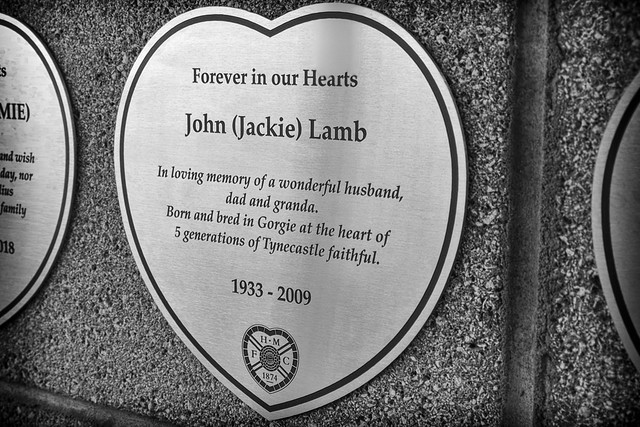
I revisited the site and took another picture of the same memorial with an aperture of f1.4

Untitled

What did I learn from this?

There is strength in individual images. I believe that in assignment 5 I have assembled the strongest set of individual images. There is also strength in the consistency within a series.

Assignment 4 tutor review changes

Following the review by my tutor for my reworked assignment 4 I have reconsidered one of the images in readiness for my submission for formal assessment.

Upon reflection, the image is ‘busy’ and this does detract from the core theme of light. I was somewhat restricted given my own spin on the theme – Helsinki Gold. I don’t live in Helsinki and have no way really to take any more images from that city. I was therefore left with selecting a different image from the contact sheet which would be more appropriate for the series.

I chose 2 images which had both been on the shortlist for the original selection for assignment 4 and one made the actual series itself

The rejected image, more about the scene than light itself.

Untitled

Replacement Option 1: This image made the original submission, it fits the gold theme well. It is a strong abstract image and would be a good final image for the reworked series.

Untitled

Replacement Option 2: This image just failed to make the original submission, it fits the gold theme. It fits well in the series as a natural progression in gold and would replace directly the rejected image as image 6 in the series. It is quite similar to image 5 however and so perhaps works against the series where otherwise the images are all different. That said I really like the atmosphere it generates.

Untitled


On reflection, I will include Option 2 in the final submission for assessment. This is perhaps a personal preference but ultimately that has to be part of the selection process.


What did I learn from this?

It is important to understand and address the brief, consider both the words and the intent behind what is being asked. On this assignment, reworking the entire thing and again revisiting the images selected for final submission I have been guilty of not paying enough attention to this aspect.

Prejudice and photography

I was cycling on Sunday, on the way to pay a visit to my mum. A regular visit for me on most Sundays. I have recently just started cycling again after a 6 year moratorium which followed 20 odd years of commuting on my bike. So something can happen every now and then when you exercise, you can have the right combination of adrenalin & state of mind & general condition of your body and perhaps a few other elements as well. These elements come together in a positive harmony which leads to a sudden upsurge of euphoria. It is wonderful and I experienced this feeling as I flew down the hill on my beautiful new Bianchi. I called out to the world ‘f*ck this is fantastic’!

My state of mind was as good as it gets for me ( that’s pretty good, but I don’t have anything to compare with ). On my left I saw a family; black, young mum & two kids dressed to kill. My mind immediately concluded isn’t that wonderful. My state of mind leapt from euphoria to what! in an instant. Why should I think this is wonderful, is this some kind of weird positive response to some latent prejudice I have. We all have right? No it was actual, full on, up front prejudice. This young family were on their way to church, it was obvious and I have never been religious in any way. Cut me open and i read Athiest all the way through. In fact I have a bit of a negative response to church and the people who go there, have done all my life, the whole idea depresses me. Then it struck me, it wasn’t religion it was age. This was 3 young people, looking great and headed somewhere they wanted to go. Church for me is not like that, it is old and dusty and depressing. So I am ageist, that’s the route of this prejudice.

Prejudice is nothing to be proud of for sure, to recognise it in yourself though is something and perhaps is some way towards personal growth and rising above. This is a strange one though. I was on my way to see my lovely mum and she is certainly getting old so this is not an all consuming prejudice, but there is something. In the recent Scottish independence referendum I was a Yes supporter and voter. I am not a nationalist, far from it, I am a one world, lets all work together, egalitarian socialist, child of Thatcher. I wanted Scotland to be free to take it’s place in the world as a new forward thinking, modern democracy alongside and as an equal partner with the rest of these isles and firmly at the heart of Europe. Most Yes voting Scots are the same. It’s like we saw it coming, the state our bag of nations is now in is the saddest I have seen it, torn apart by actual English nationalism, superiority and prejudice. At least that’s what it looks like; Farage, Johnson and Trump have a lot to answer for in the way they have seized upon a mood and exploded the zeitgeist to overtake the collective minds of the good folks of England ( one of my favourite countries. I lived in Somerset in the early years of bringing my kids up, a truly wonderful part of the world ). I have voted SNP since 99 but I am a natural labour supporter, where is the soul of the labour movement? Now more than ever we need a hero from the left who can challenge this madness.

I remember commenting during the campaign for Scottish independence that I thought people over 65 shouldn’t vote, I meant it. They won’t be around long enough to really feel the impact, the referendum was for our children and their children, not for our parents and grandparents. Ageist! This Tory party leadership contest is going to be decided by a bunch of aged rich folks who may well have at some point been less well off, many will have been rich all their days, but will have been more than comfortable for many decades now. How in touch are they with what this country needs now and in the decades to come. None, they haven’t a clue. Ageist! ( OK classist too!). Prejudiced!

ageism

So I think about prejudice and photography and look into Gordon Parks.

Coming from a large family and growing up in Kansas in the early years of the 20th century Parks was formed in poverty and hardship. In a career of over 6 decades Parks created documentary addressing poverty and racism and became the first African American to work for life magazine. Park’s career delivered portraits of Muhammad Ali Dr Martin Luther King Jnr and  Malcolm X. Parks went on to direct the 70s classic movie Shaft.

The era is described perfectly here in this quote from the guardian. [2014]

“Gordon Parks’s images of everyday American life under segregation were first published in 1956, one year after Rosa Parks refused to give up her bus seat in Montgomery, Alabama. By then, the bus boycott she had triggered was transforming the fight for civil rights into a national movement, and thrusting a young minister called Martin Luther King into the spotlight.”

An example of Parks work below taken from AnOther. [2019]

parks

Department Store Mobile, Alabama, 1956© Photography by Gordon Parks. Courtesy and copyright the Gordon Parks Foundation

The decisive moment charged with the gravity of real world human condition, to provide an historical document of power and importance.

This prejudice I have always despised above all others, perhaps this is because I grew up through the years when we ( our society ) was coming to terms with it’s racism. To look back on 70s media now is a shocking and troubling experience. Where then is ageism and how should this be tackled. I fear for now my hope is that the young take control of our world and fix it before it is too late.


Bibliography

the guardian. 2014. A segregation that was never black and white: Gordon Parks’s photographs of 50s Alabama. [ONLINE] Available at: https://www.theguardian.com/artanddesign/2014/nov/12/-sp-segregation-american-south-gordon-parks. [Accessed 25 June 2019].

AnOther. 2019. The Man Who Fought Prejudice with Photography Daisy Woodward. [ONLINE] Available at: https://www.anothermag.com/art-photography/9931/the-man-who-fought-prejudice-with-photography. [Accessed 25 June 2019].

Brassai’s use of light to strengthen composition

Extract from the interview in American Suburb X. [2011]

T.R-J: What for you is the relationship between composition and subject matter?

B: There are two things: I think that there are photographers who compose very well but who have no understanding of life or human things. There are others who have much human understanding but no feeling for form. I feel that it is important to have both because one must convey a living thing with strong composition. Form can be many things in photography. Photography has nothing to do with painting, but even so there is a frame in which the photograph must be composed. Photography has one leg in painting and one leg in life but the two things must be combined. I like well composed pictures: I don’t like disorder in a photograph. Photography in the beginning began by imitating painting and then there was a revolution in different countries. Stieglitz in the United States and Emerson in England, and Atget in France. They all tried to do something different, they didn’t want photography to be taken for painting but wanted something especially for photography.

Brassai likes ‘well composed pictures’. With respect to part 4, I consider how Brassai uses light to create good composition. Generally speaking Brassai compositions appear simple and strong, there is not much complexity to distract the observer.

In Prostitute in the Quartier Italie, Paris, 1932, Brassai further uses light and shadow to to emphasise what is important in the image to bring forward the message he has. The subject is well lit, but only partially. The street where she operates and lampost where she may linger between encounters are also lit well, everything else is allowed to fall into shadow to some degree.Perhaps Brassai is commenting on the subjects shady occupation; Prostitution is right here in front of us, always has been and everywhere, but we prefer to keep this out of the limelight, shaded from our sensibilities.


Bibliography

American Suburb X. 2011. Tony Ray-Jones Interviews Brassai” Pt. I (1970). [ONLINE] Available at: http://www.americansuburbx.com/2011/08/interview-brassai-with-tony-ray-jones.html. [Accessed 2 June 2019].


Street photography or not street photography


“Time and patience are essential in street photography. One has to walk a lot, and, sometimes, one has to wait for the photograph to happen. In some cases, the photographer will wait until a subject enters a chosen stage–the foreseen composition.”

Magnum photos [2019]

Reading through this article, I found this statement to sum up aspects of my experience in taking the shots for assignment 3. In most of the shots that made the final set I visualised the photo i wanted first, set it up and waited for it to happen. Some more successful than others of course but as a strategy to take the shots it was enjoyable.

From this article I discovered Susan Meiselas and her photographs from Nicaragua in the 1970’s interesting and powerful. https://www.magnumphotos.com/photographer/susan-meiselas/

Images of conflict situations are often very powerful, transport the viewer right there to the scene even decades later. “A car of a Samoza informer burning in Managua” is particularly moving.

Susan Meiselas is not considered a street phitographer by Magnum yet is considered to have produced street photographs of the highest order. “Hence, some Magnum photographers who might not be considered “street photographers” happen to have made street photographs of the highest order.” 

What makes street photography is ubiquitous and in this way many artists can create without dedication to the style, perhaps.


Bibliography

Magnum photos. 2019. The joy of seeing magnum street photography. [ONLINE] Available at: https://www.magnumphotos.com/theory-and-practice/the-joy-of-seeing-magnum-street-photography/. [Accessed 28 May 2019].

Reworking assignment 3

A couple of pieces of feedback from my tutor on assignment 3 has led me to look at some rework on the assignment. I have not resubmitted assignment 3 however I may consider for final submission to OCA.

  1. The series wrks better as photobook and in monochrome. I was very close to submitting in monochrome as I do believe there is greater consistency and in some cases more powerful images.
  2. Images 3 & 4 are the weakest and would improve from a wider framing. I think I agree with this and fortunately I had some leeway on the original photographs allowing the creation of a wider frame.

The reworked series in photobook form:-


Untitled


Untitled


Untitled


Untitled


Untitled


Untitled


The reworked images :-

Untitled


Untitled


Untitled


Untitled


Untitled


Untitled


Untitled


Untitled


Untitled


Untitled


Exercise 4.1: Daylight – Sally Mann

Personal view on light quality.

With Southern Landscapes, and other series (Battlefields, Family Pictures etc), Sally Mann uses the wet plate collodian method. A method dating back to the early days of photography, this adds a level of mystery to the photographs in Southern Landscapes that complements the quality of light; early morning or late afternoon.

In particular the images below with their deep shadows created by the low sun provide a depth of image that makes the viewer feel very much ‘in’ the image. There is a richness alongside the depth which would be far less pronounced had the photographs been taken at mid day or with dispersed light of cloud cover.

[Sally Mann:2019]

Southern Landscapes 1

Southern Landscapes 2

The quality of light in these photographs is critical to their success, delivering a fundamental component to the emotional impact.

I wonder how much of the impact can be attributed to the collodian method with it’s high flaw contingent. Sally Mann herself says “I guess, because I was so immersed in that whole glass-plate, nineteenth-century aesthetic, it was natural to want to learn how to do this.” in [art21:2011]


bibliography

Sally Mann. 2019. Sally Mann. [ONLINE] Available at: https://www.sallymann.com/. [Accessed 5 May 2019].

art21. 2011. Collodion Process Sally Mann. [ONLINE] Available at: https://art21.org/read/sally-mann-collodion-process/. [Accessed 5 May 2019].